I remind myself how my wily mind is not something I need to be afraid of, not something I need to contain, not something to fight off or feel betrayed by. It isn’t an enemy, and it is not a threat.
I got lost on my way to this post. I got lost at least thrice — first, into the forest of lost passwords and bloated phone drives to transfer larger video files out of my old Huawei P30 Pro and to my laptop. Then again, picking my way through the sticky, thick new growth of video reels, the sleek new technology that make production faster, easier, shorter. And then again, for the last time, across the vast but familiar galaxy of image hosting sites. I used to upload folders of images, the entire first and second stomach of our thumb drives and memory sticks, from a former life on the now-defunct subscription site Photobucket, when image hosting (instead of galleries, curations, portfolios, and edits) was more common. After I found out there was an easier way to export files from my phone directly — this, after years of backing up through cloud services. After downloading new software and creating a bad first draft, after figuring out how to clip and trim videos, how to enhance them with a simple filter. After finding FileGarden, signing up for an account, figuring out how to keep it on my main phone for future uploads. After doing everything else in preparation – up to the actual thing that I should have been doing.
After.
After gathering enough fragments of my attention. After running out of excuses. After I feel myself split in two: a first, stubborn version fiddling with a room of stuff. And another, on their knees, begging for attention to go back to writing this story. A knot of coercion enforced by, and against, my own self.
External deadlines, grading structures, seem better able to lift me out of this similar gridlock, helped to straighten the path into a single thing that was easy to understand because all I had to do was follow. When I last confronted the draft for Full of Grace, there were too many ideas I wanted to get right, and no place on a story structure to put it all – ideas coming on too quickly for me to organize, let alone write. Before coming to this place, I had to go back there. I have been trying to relearn how I put ideas together. For short stories, I was used to following an idea to a terminus that I deciphered along the way, but for what Full of Graceis still becoming, and to complement the way my brain seemed to work best, I needed a framework and a guide, a map. I was forcing myself to chip away at a shape or a figure – but the longer the process took, the more I recognized that I was prone to decision fatigue, on one hand, and misplacing details altogether.
I thought that could be an outline, but as I worked on one outline – a skeleton of a thing – but the form wept and sagged with the amount of stuff I had no place to put in. There were references I couldn’t make, definitions and decisions I was making about the characters or the plot that kept getting lost. That was when I started on a supplementary worlding-wiki where I put definitions, characters, relationships.
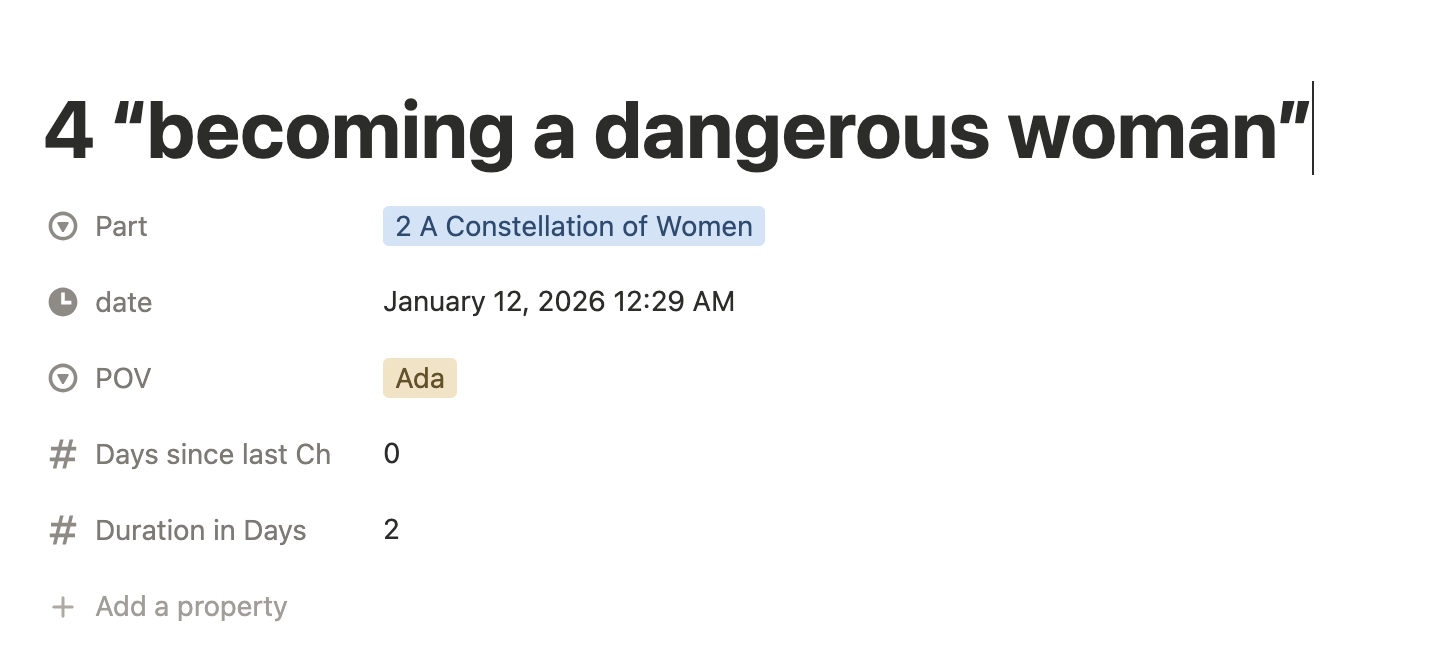
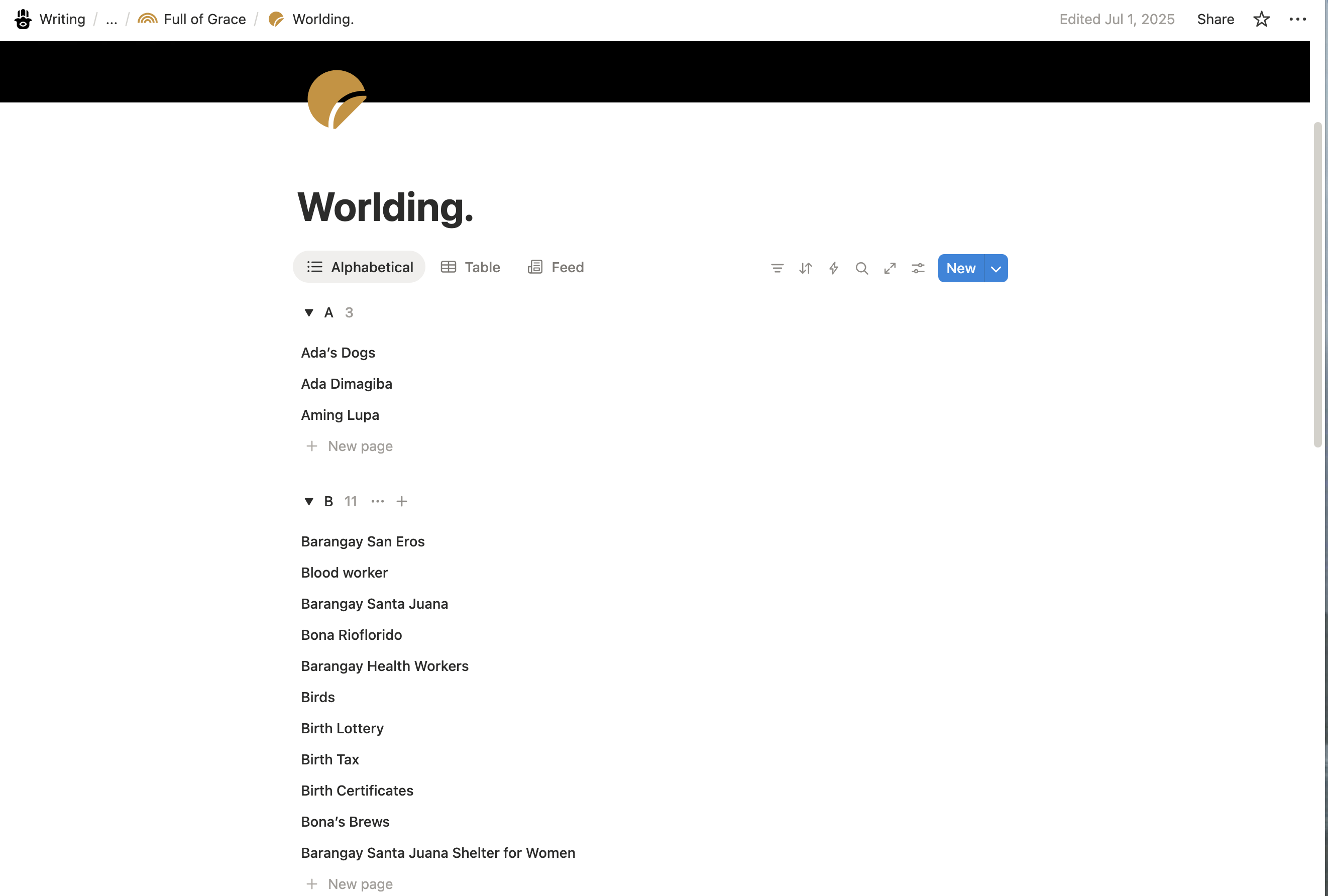
The women in the world ofFull of Grace gathered helpfully into this liminal space, instead of crowding my mind. I couldn’t rely on simply long lists with endlessly nested subsets of ideas, not anymore. In the chapter-wiki, I put each chapter into its own notebook. When I think about writing within a system and a story, I crave some limit against my endless tinkering. I read that there was no roadmap to writing a novel, or any longer form of fiction, but what I found was that my mind tended to write scenes across different chapters, and the connective tissue was the hardest part of figuring out how the story could go. Forcing my brain to go through something from top to bottom makes the thinking through and the tinkering less pleasurable.
I still need help to figure out how my persnickety brain can work on a bigger chunk of writing without feeling like the effort was going nowhere. I still need help to figure out how to write about the process without the overwhelming feeling of being watched, and being scorned. I still need help to understand how I can put more of myself into my work, and more of myself out in the world – not for consumption, but to remove myself from being unknown, as a way to be known and still held.
